
abstract
The clothes we buy, wear, and consume become barren landscapes once they end in the landfill. The daily choices we make set in motion terrestrial scale effects producing dystopian landscapes, distant symbols of an imminent environmental collapse.
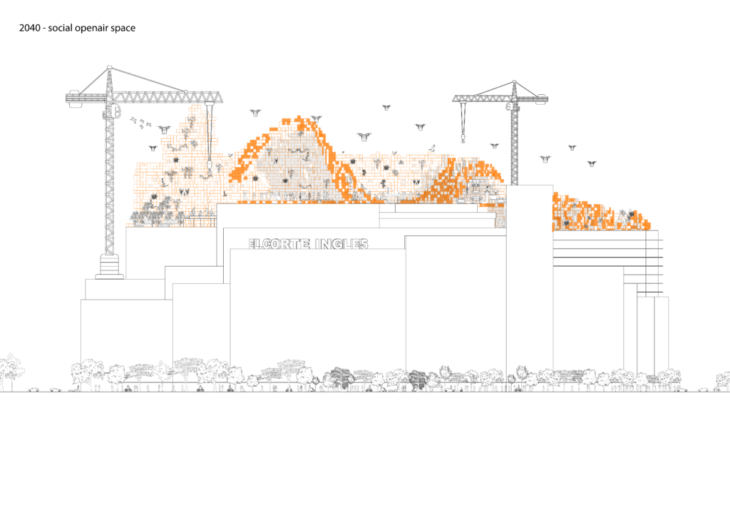
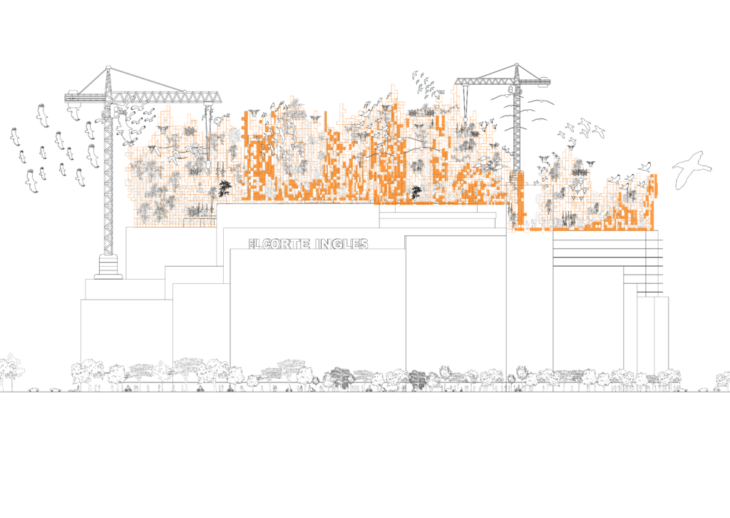
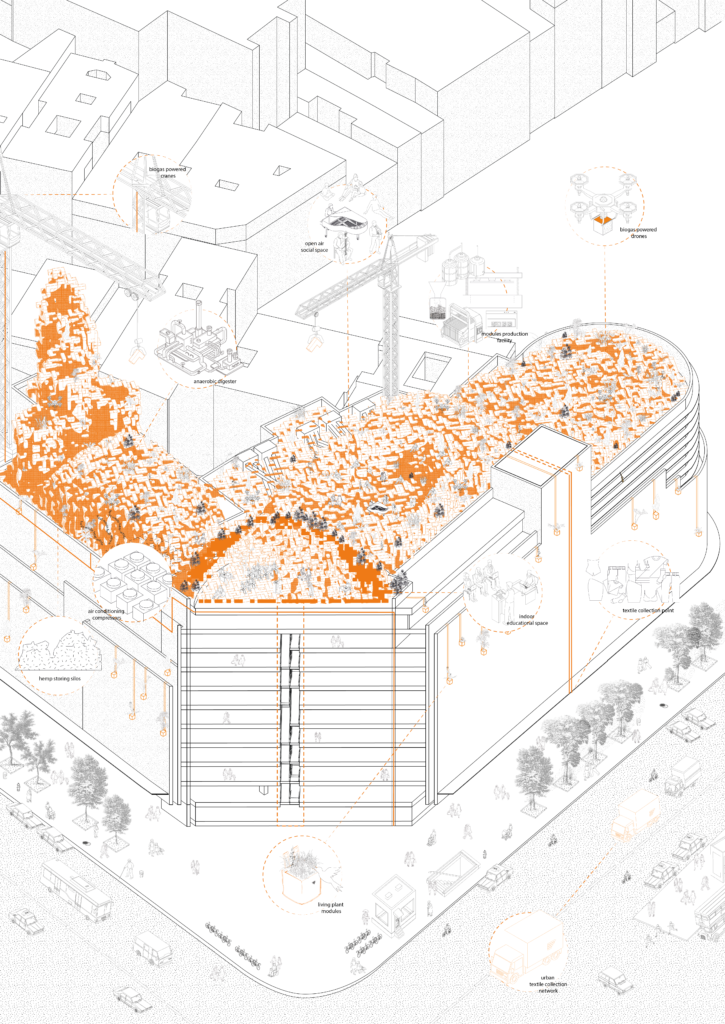
Wastescapes is a regenerative architecture that spreads and mutates like a virus and hacks the existing building, materializing for citizens and industry the worst effects of linear fashion waste streams. The morphology of the roof, the hills and valleys, are formed from compressed textile waste. Scattered among these ruins, hemp intervenes to create fertile earth modules, slowly working to reintroduce the waste back into the natural cycle of decay and renewal. The concept of landfill is overturned, and the tail of the fashion supply chain is re-mapped as a surreal landscape. If the earth transforms into a different planet, will we transform into different people too?
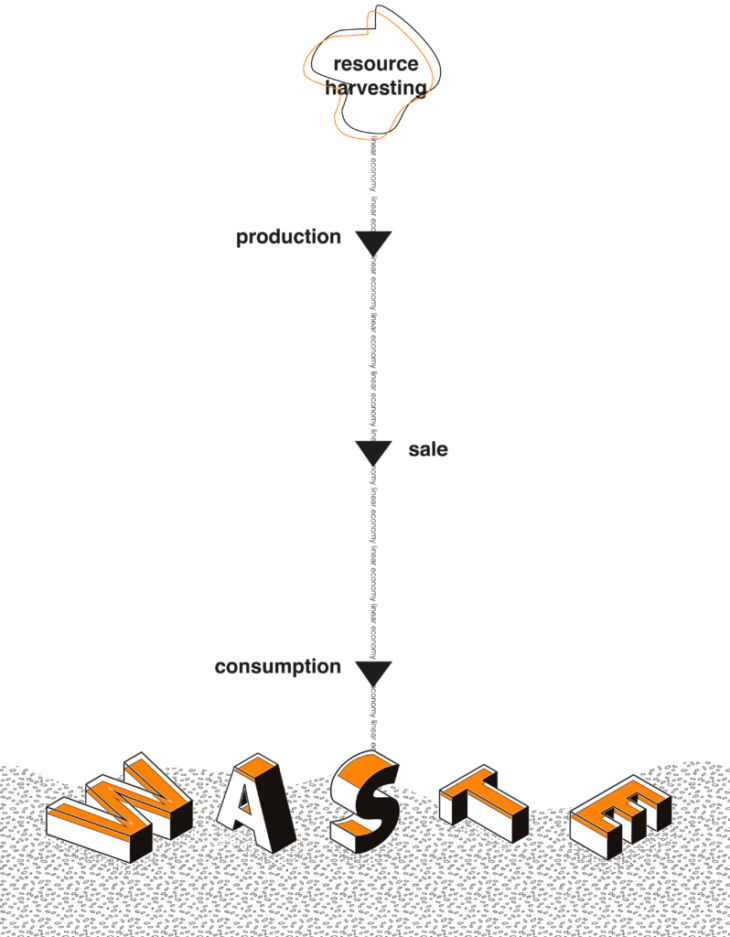
state of the art: the fashion industry
The prevailing model of the fashion industry is one of linear material and energy utilization. Resources are extracted, energy is used to create product, product is used for a short time and eventually ends in the landfill at the end of its life. Every 15 minutes, 300 garbage truck-loads of textile waste end up in the landfill as a result of this linear model. While some of the synthetic materials used in fashion are able to be recycled, they continue to pollute the environment through the shedding of microplastics during use and washing.
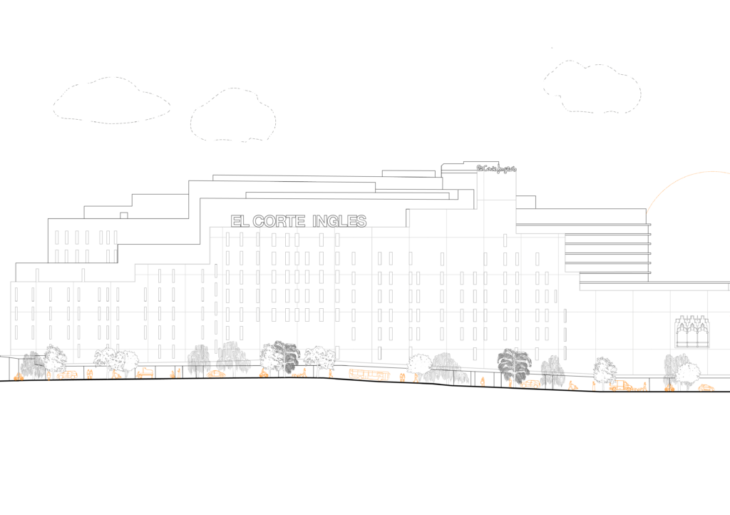
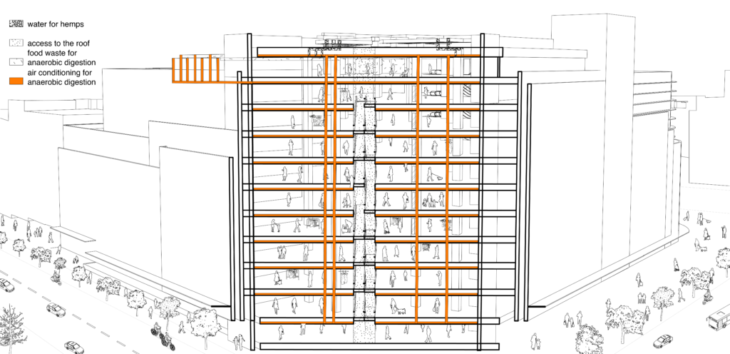
the host: el corte ingles
El Corte Inglés at Placa Catalunya is a symbol of consumerism and capitalism in the heart of Barcelona. Following the trend towards online retail and the decline of in-person shopping, the building has lost its cultural and economic relevance while remaining a physical barrier to the health of the surrounding urban landscape.
strategy: a regenerative landfill
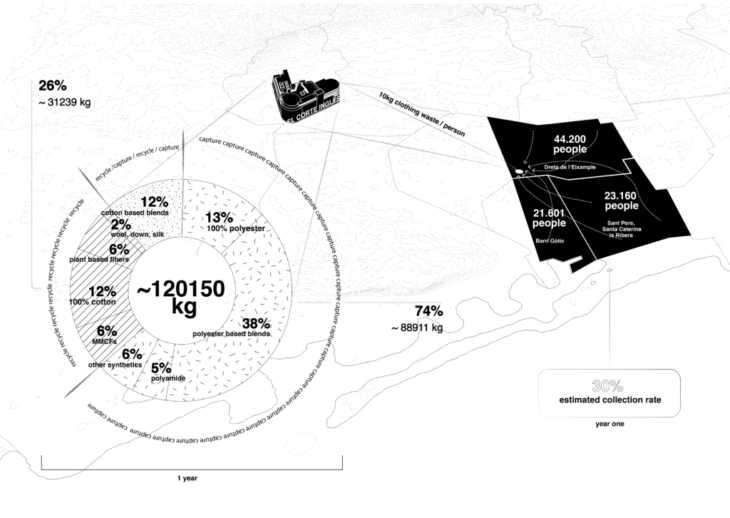
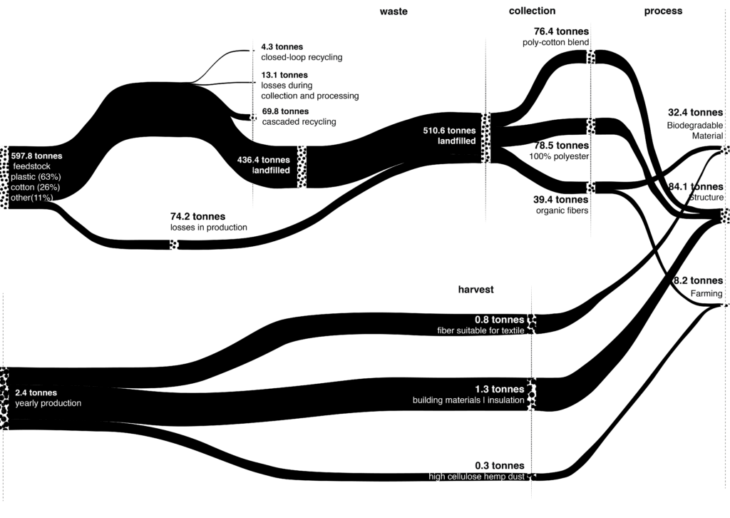
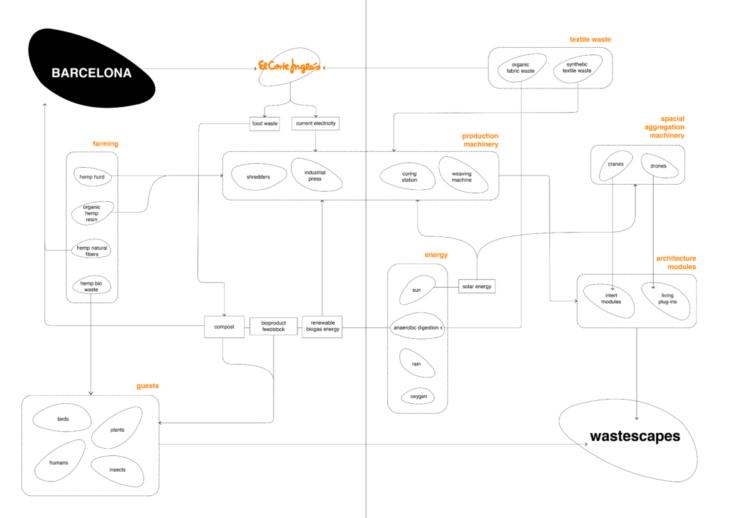
Utilizing the existing textile waste of the neighborhoods immediately surrounding the site we are able to capture up to 120,150 kg / year before it ends up in the landfill. From this, a portion that is primarily natural fibers can be used to generate an energy source through anaerobic digestion. The remaining material is captured in our architecture as the primary building material.
catalyst: regeneration through hemp
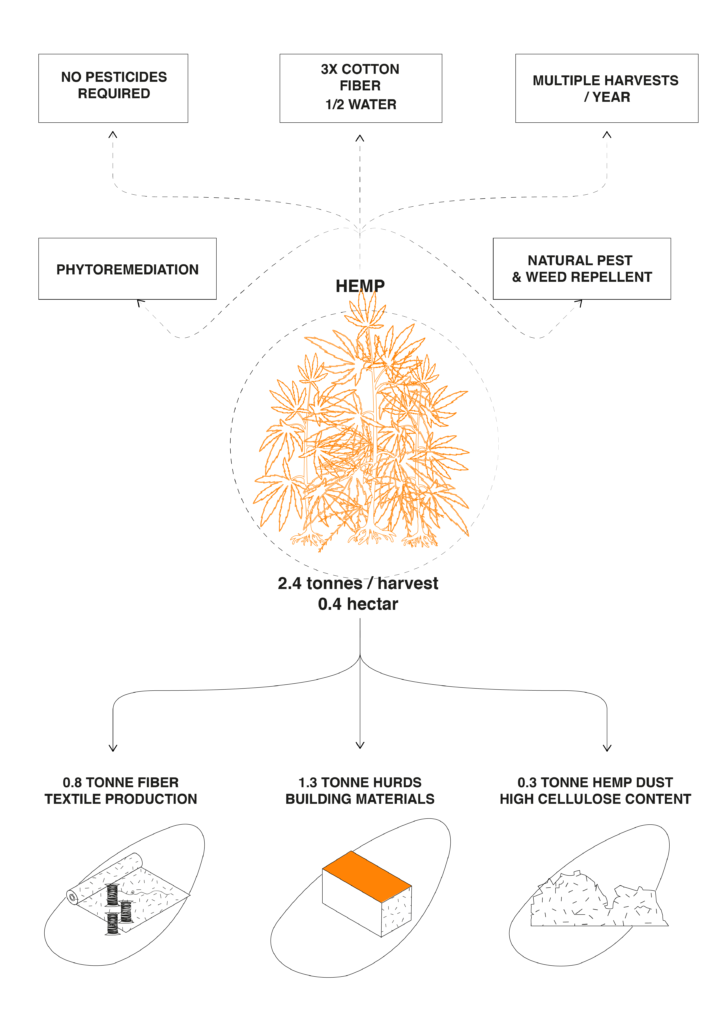
Hemp is slowly growing as a renewable and regenerative alternative to the synthetics that dominate today’s fashion. Not only does it provide a variety of end products including medicine, textile, and plastic resin alternatives, it is also highly productive as it can provide 2-4x the material for paper per hectare as common trees and 3x the fiber for textiles as cotton, all while requiring less water. In addition, hemp is naturally pest repellent, reducing the need for synthetic pesticides, enriches the soil making it an excellent rotational crop. Recent studies have also shown that hemp is capable of phytoremediation, removing toxins such as heavy metals from polluted soils making it a possible solution for toxic waste spills.
prototype: combining hemp and textile waste
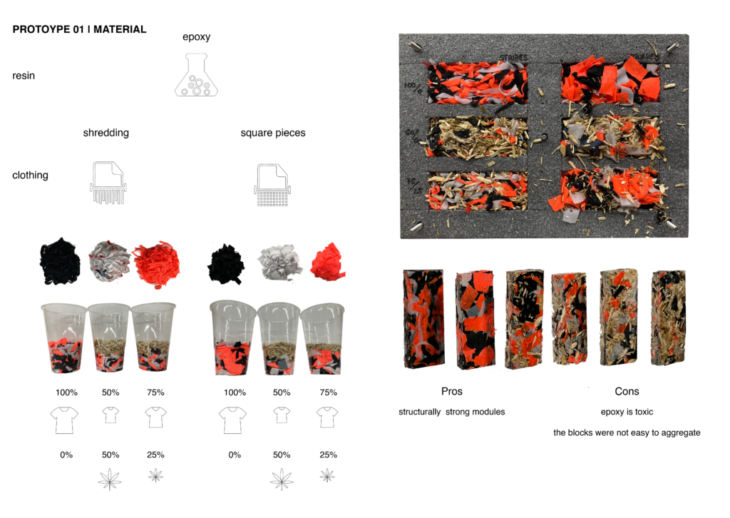
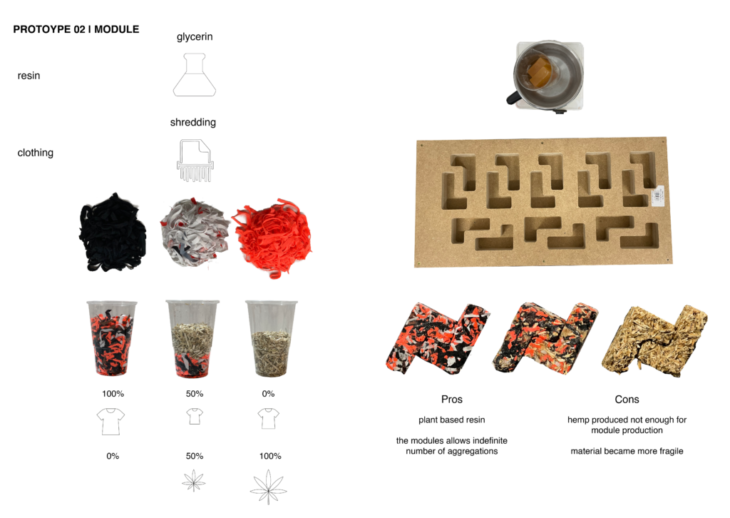
An initial prototype was devised to study the behavior of textile waste and hemp when compressed with a binding agent, in this case epoxy. Different shredding strategies and textile/hemp combinations were tried.
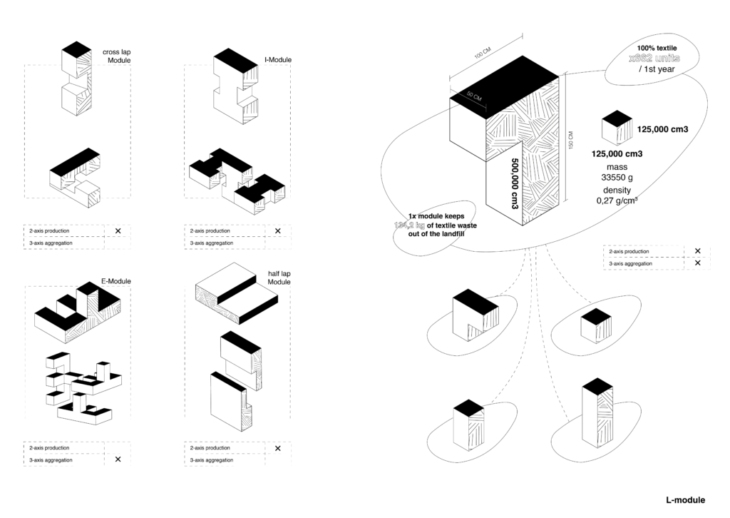
In parallel, an architectural strategy was developed using a simple form that could utilize the pressed material while achieving some degree of interlocking. Of the options studied, an “L” block was chosen for its combination of simplicity of production and variety of aggregation options. Using the block as a counter mass we were able to achieve cantilevers in order to create desired interior spaces.
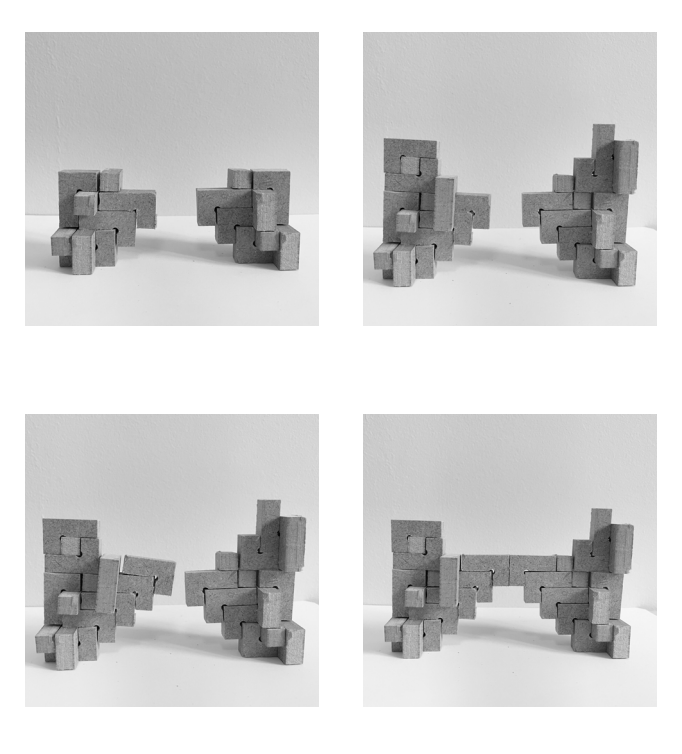
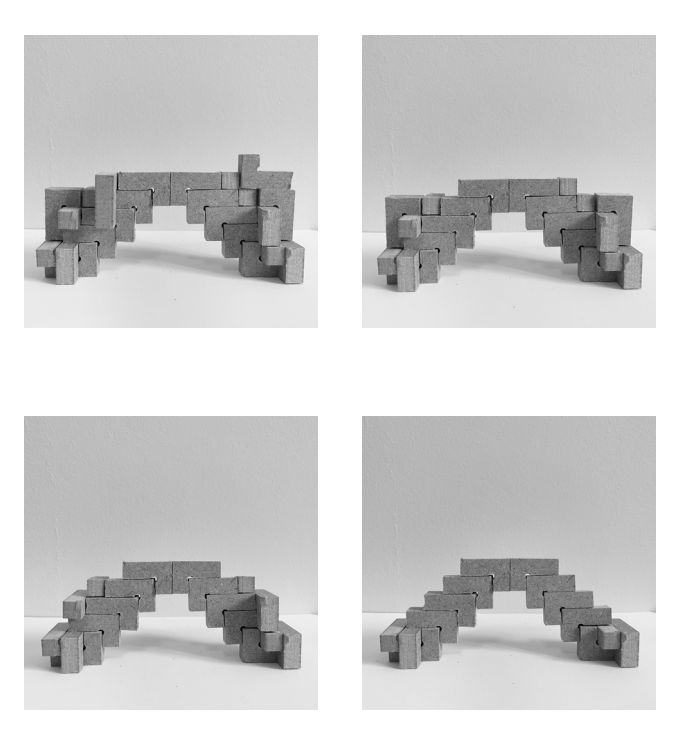
Last, a final prototype was developed combining our architectural module with our material exploration. Data from this experiment was used to inform the timeline of the project and the amount of material that could be captured in each building module.
the proposal: the slow destruction of el corte ingles
Using our research and prototype findings we developed a series of programs that would evolve the building over time. First as educational space for humans, then as bird sanctuary as nature slowly reclaims the architecture, and finally as a landfill forest, without trace of humans and eventually leading to the collapse of the building itself.
Wastescapes is a project of IAAC, Institute for Advanced Architecture of Catalonia developed at the Master in Advanced Architecture in 2021 by: Michael Joseph Groth, Neslihan Gulhan, and Valentina Minoletti; Faculty: Javier Pena & Oriol Carrasco; Assistant: Alexander Dommershausen