THE SALINE SOLUTION
</p>
Global water supply
The global population is growing exponentially, and clean drinking water is arguably the world’s most valuable resource. However, its scarcity is a cause for concern.
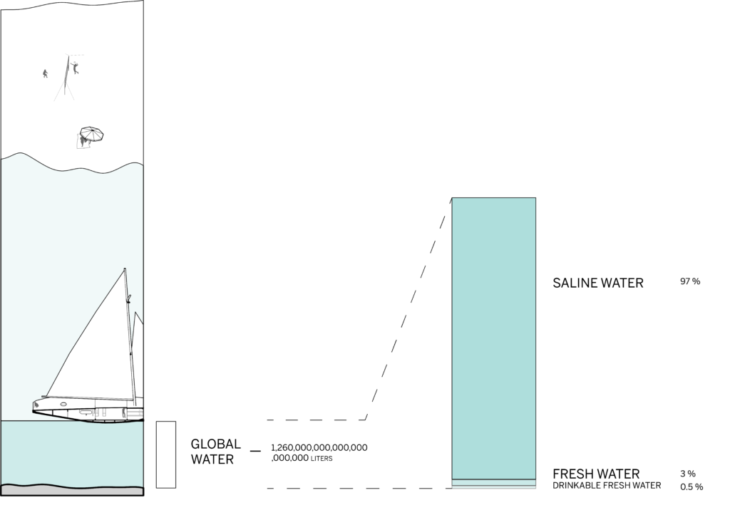
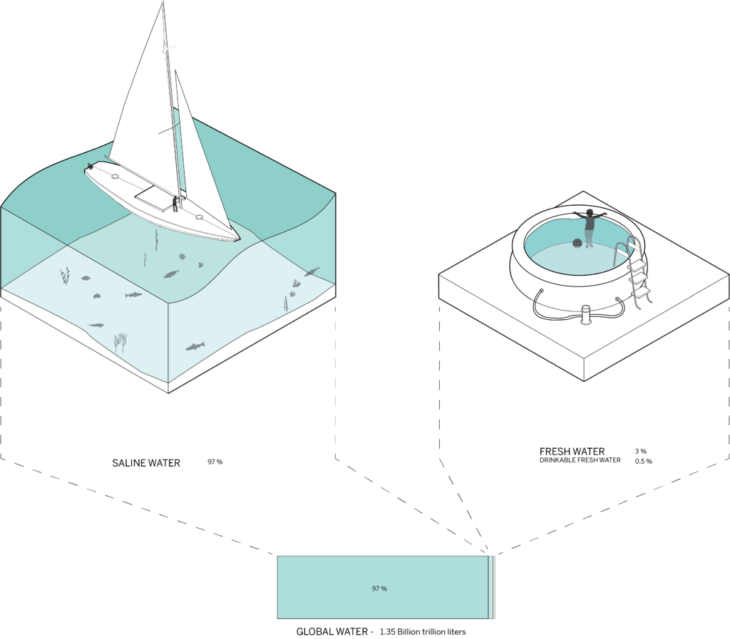
Available Global Water Supply Diagrams
Only 3 % of the world’s surface water is fresh water, and only 0.5% of that is available for human consumption, and not trapped in glaciers or aquifers.
Desalination
Desalination plants are being constructed at an unprecedented rate to turn ocean and sea water into drinking water.
However, their process of desalination creates high amounts of brine, with excess amounts of salt being pumped back into the oceans.
Can we take this brine waste and use it to enhance our environment instead of harm it?
Salt has a number of attributes which enable it to act as a useful building material.
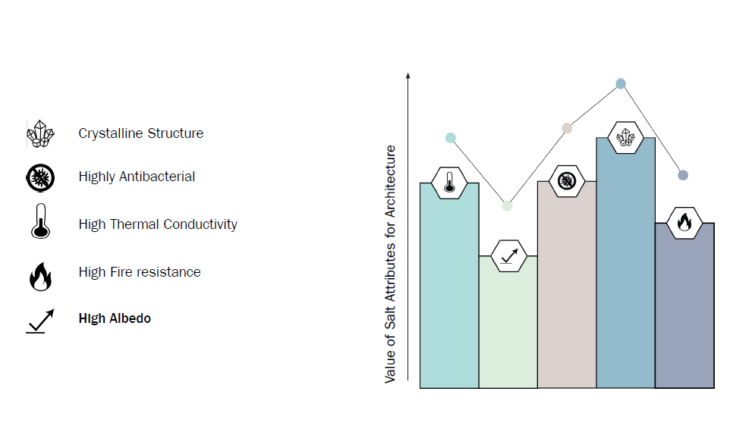
Salt attributes of interest
By using controlled growth parameters and specific materials, we can create panels for building skins which enhance the environment of the building occupants.
Through a series of experiments, the optimal growing parameters were determined.
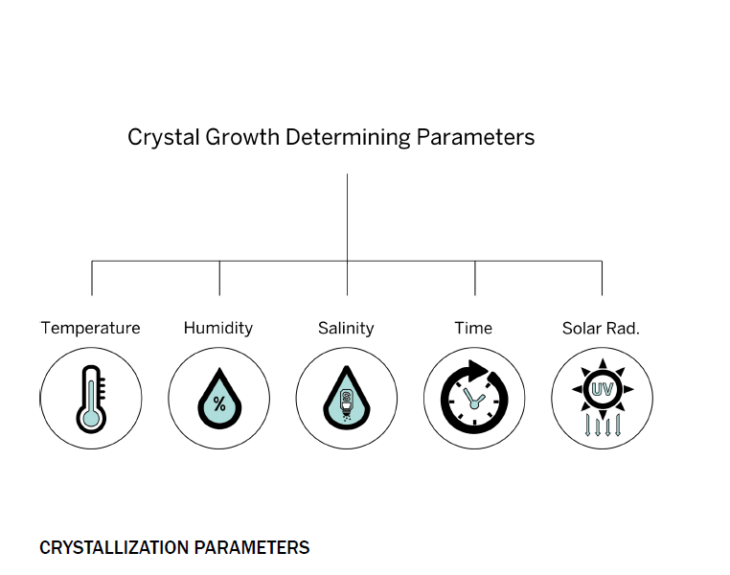
Artificially Controlled Growth
Optimal salinity and density of strings were determined through a series of experiments.
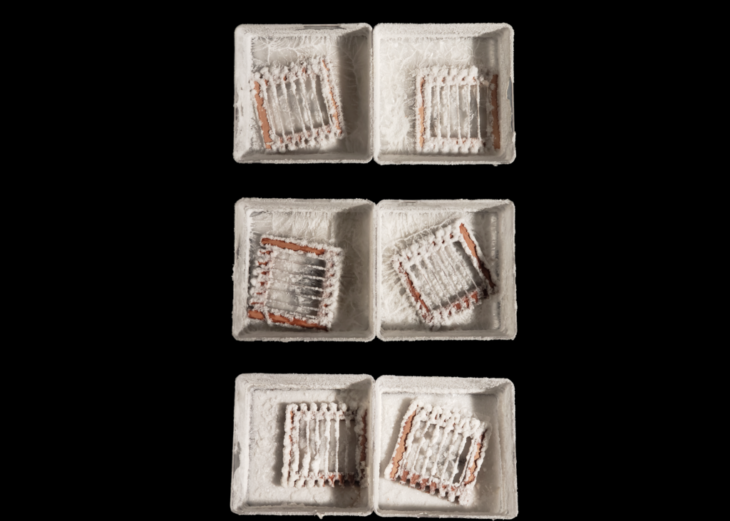
Salinity and Density Experiments
The temperature and humidity of the salt growth conditions varied over the duration of the experiments.
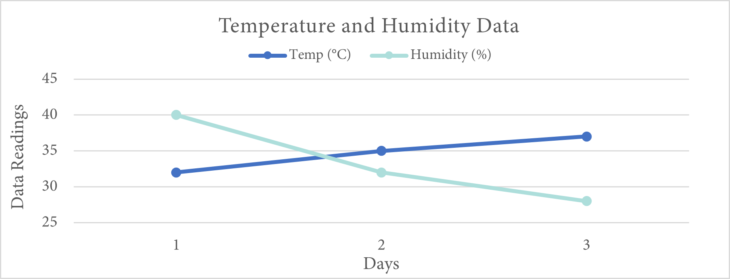
Data of Humidity and Temperature
The optimal aesthetic appearance of the crystals was determined to be as follows:
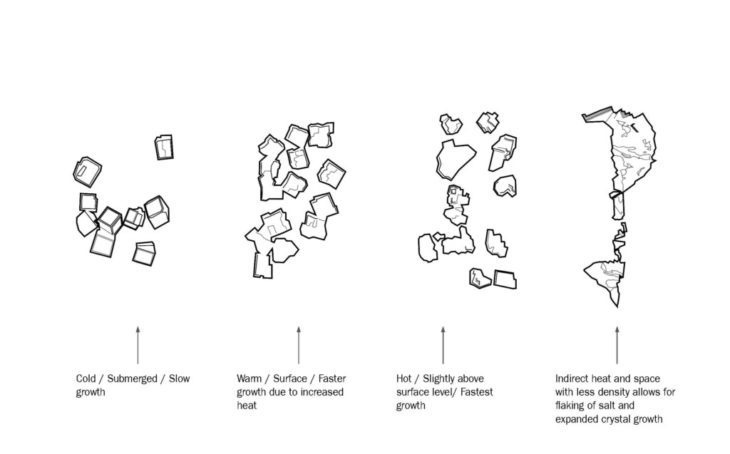
Crystal Properties According to Growth Parameters
The final experiments placed the prototype frames of 0.5m x 1m in baths of salt water and used ceramic infrared heaters and a fan to control the growth.
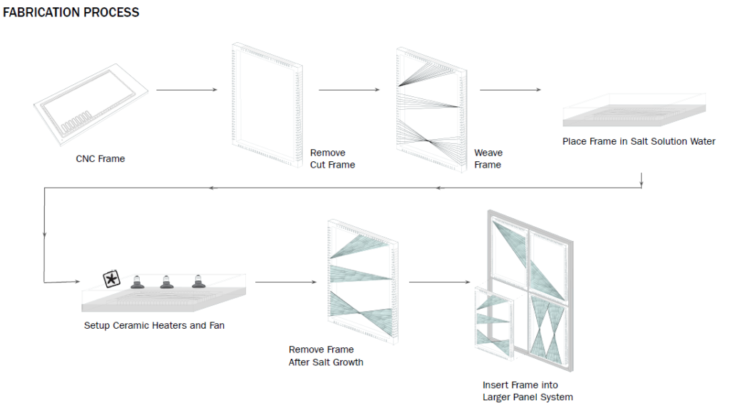
Final Fabrication Process
The application to a building was conceptualized with solar analysis done to determine weaving density. The following images showcase the solar analysis done with Grasshopper and Wallacei.
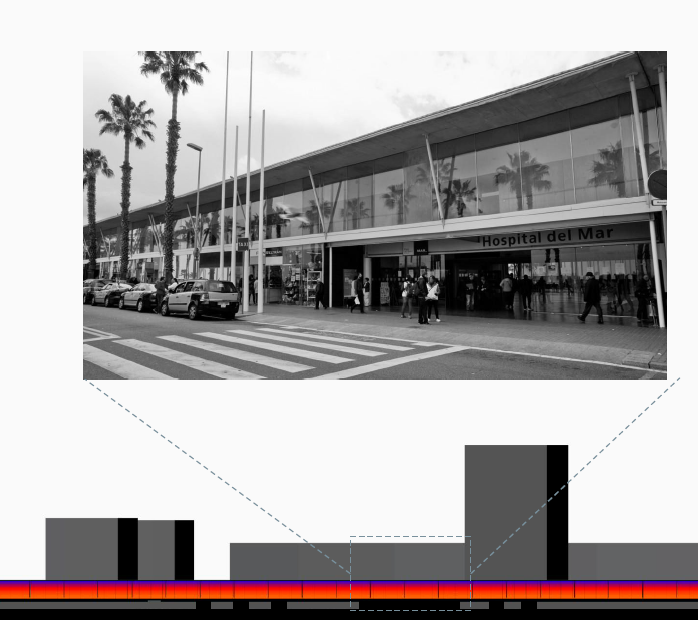
Solar Analysis of the Hospital del Mar
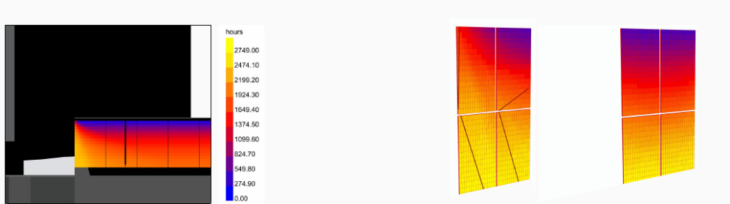
Wallacei applied analysis

The technical diagrams were conceptualized as follows:
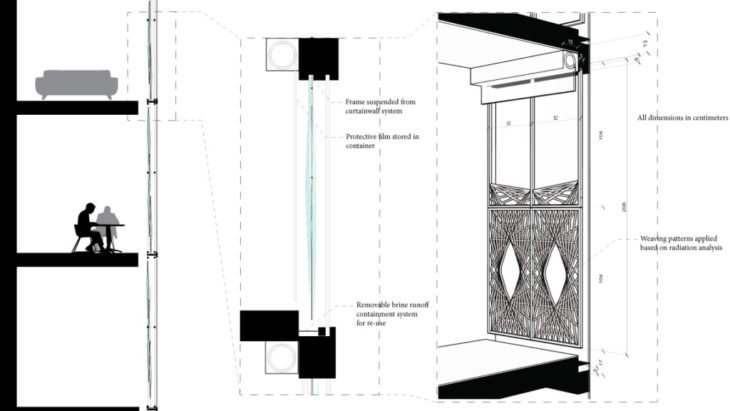
Technical Diagram of Applied Building Skin
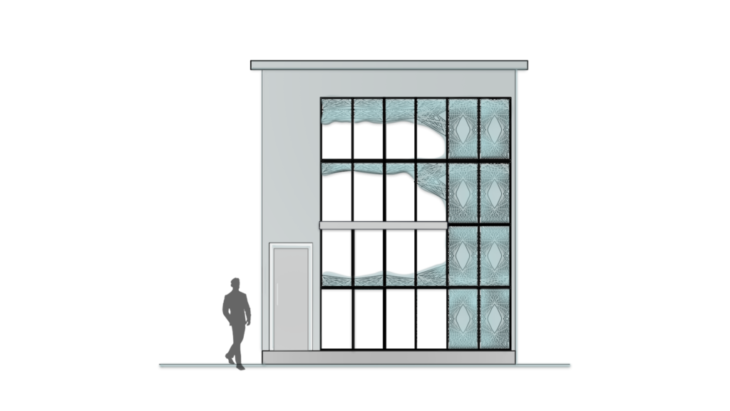
Elevation of weaving patterns created using Wallacei Analysis
The final frame prototypes were constructed using nautical plywood, cotton wool, and the salt water bath optimized for salt content.
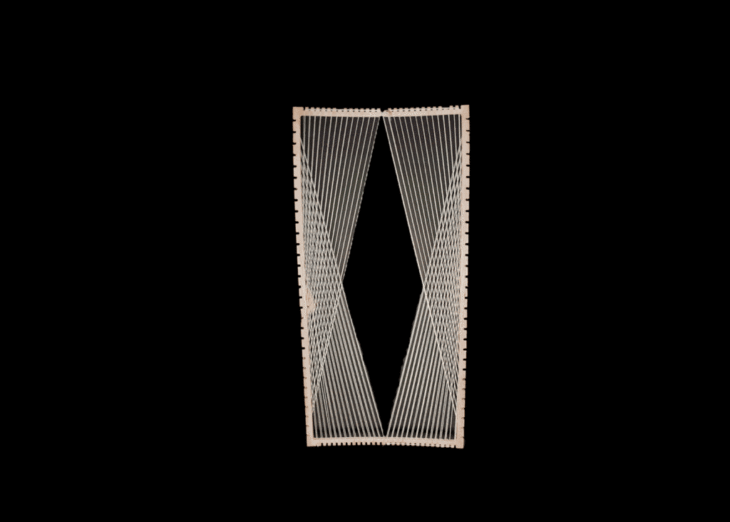
Final Frame Prototype
Future industrial use imagines industrial construction as follows, using controlled brine extraction and solar powered heat to create the crystallized panels.
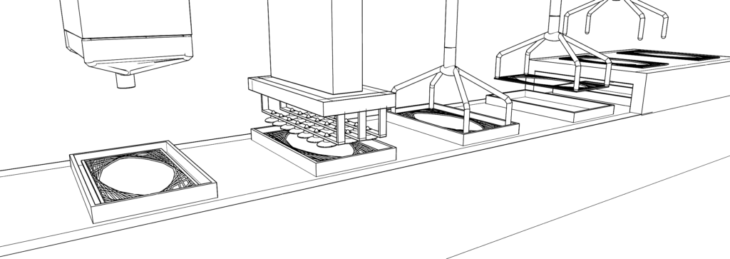
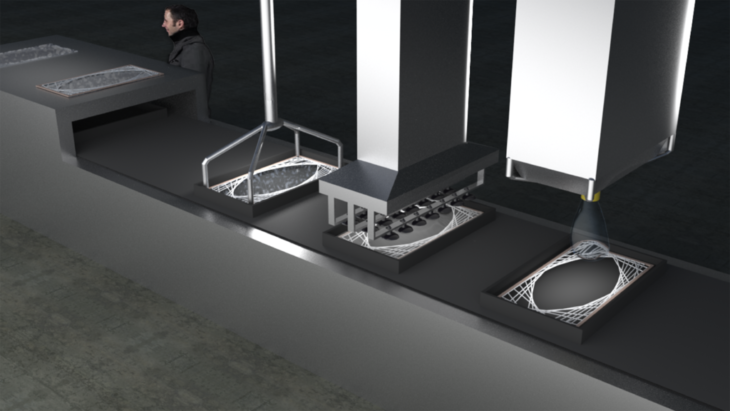
Industrial Creation of Panels
Salt panels in an applied context in the Hospital Del Mar:
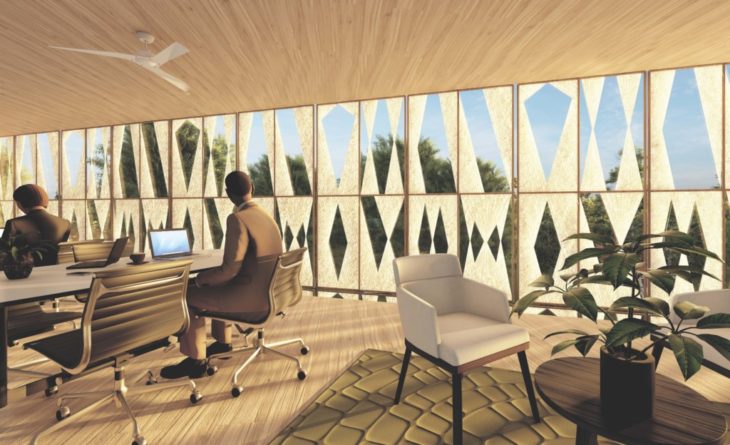
The final prototype combined four different weaving patterns to show salt growth for different shading conditions, as seen below.
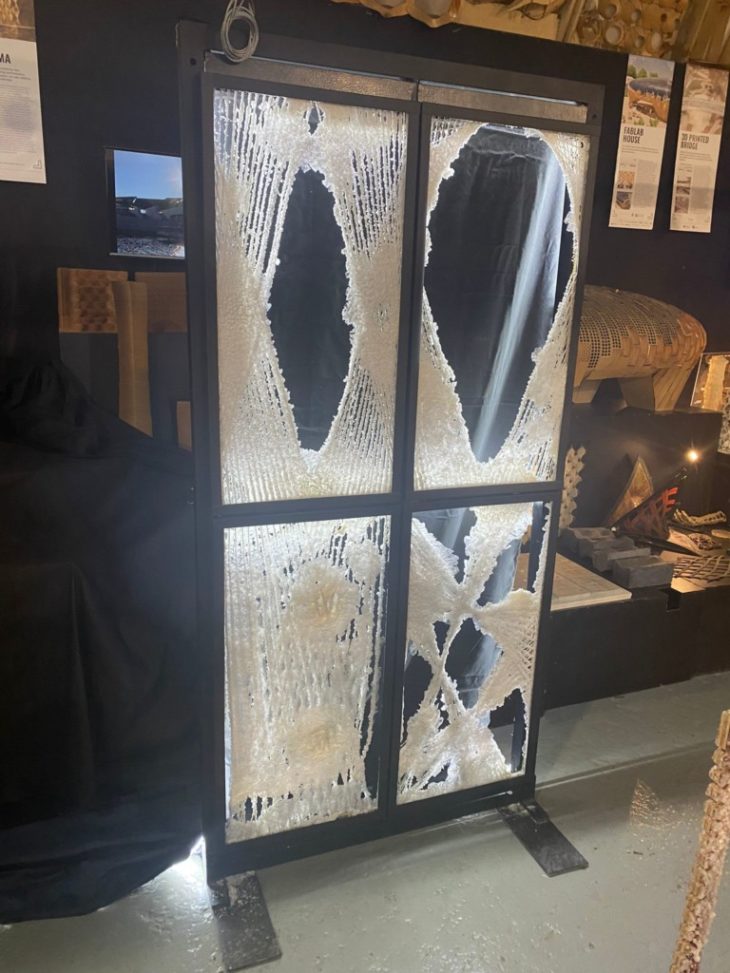
Final Frame Prototype
THE SALINE SOLUTION is a project of IAAC, the Institute for Advanced Architecture of Catalonia, developed during the Master in Advanced Architecture (MAA01) 2021/22 by students: Jack Davis, Emily Rackstraw, and Meagan Enright; Faculty: Areti Markopolou, David Leon; Faculty assistant: Nikol Kirova, Eduardo Chamorro Martin; Student assistant: Alexander Dommershausen.