NEST 2.0 – Design for assembly and disassembly
Objectives:
- Create an efficient and hierarchical construction process
- Create hierarchy in structural performance of members
- Eliminate the oculus as the primary member countering lateral deformation.
- Reduce the number of steps involved in construction
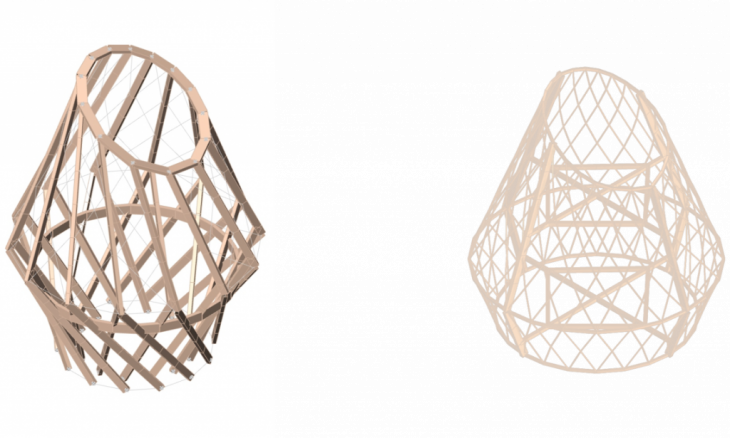
NEST 1.0 NEST 2.0
Design Development
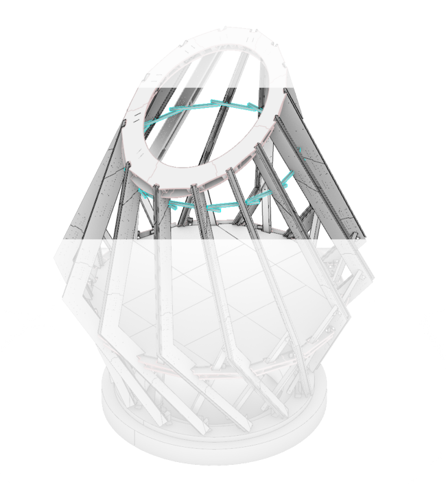
Intermediate ring to replace oculus as only structural member
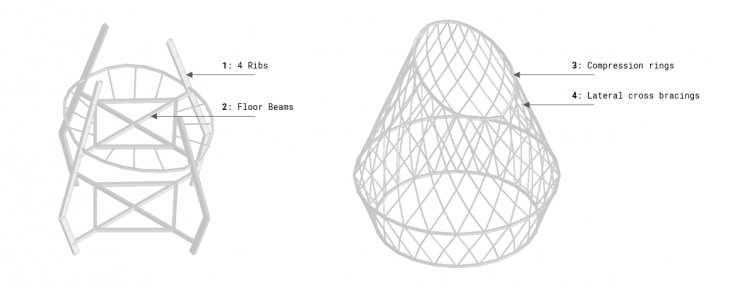
Conclusion : 4 ribs normal to the ground to counter most of vertical load and by creating a lateral cross bracing lattice to counter most of lateral load, a hierarchy in construction and structural performance can be achieved. In addition, number of steps required for assembly is reduced.
Grid shell facade
Reference
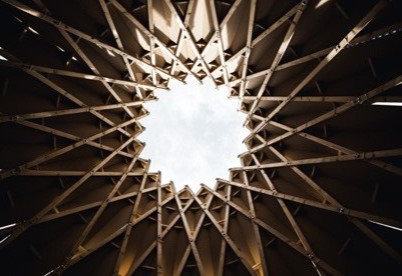
CalgraySAP_Research tower
Details:

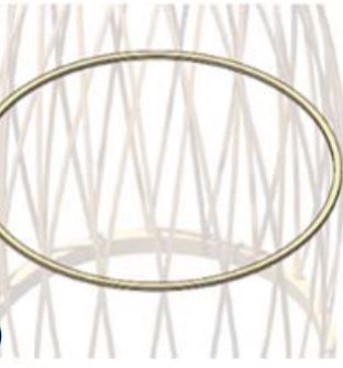
Cross Joints Compression ring
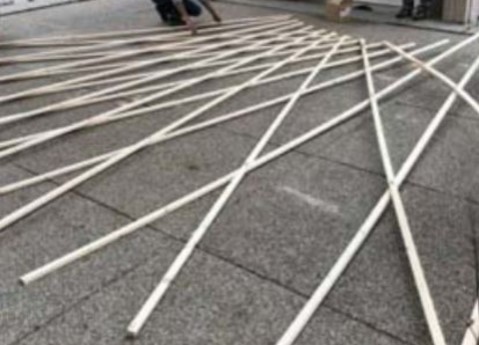
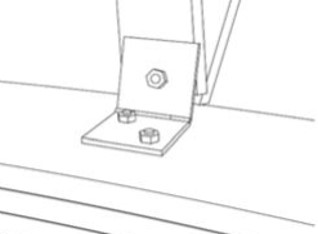
Gridshell lattice assembly Foundation hinge
Connections Details
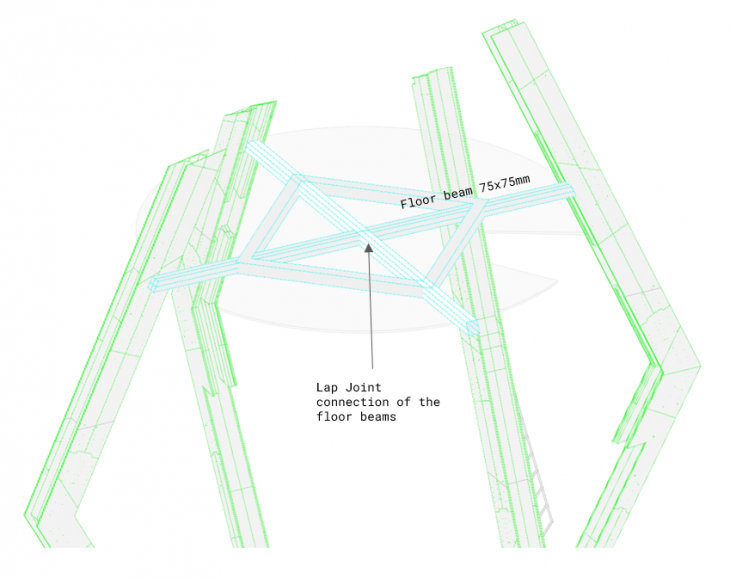
- Connections at happening at four ribs.
- 2 beams of 75x75mm. Connected via lap joint.
Connection between floor beam and ribs
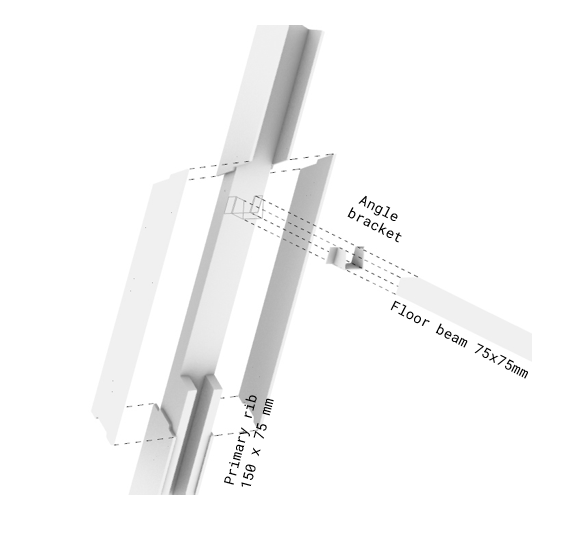
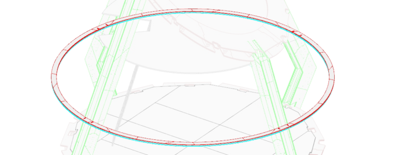
Connection between floor and ribs Compression ring for facade
40mm thick,ie two layers of 20mm each
Fabrication Logic
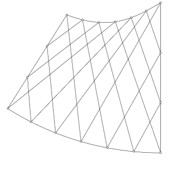
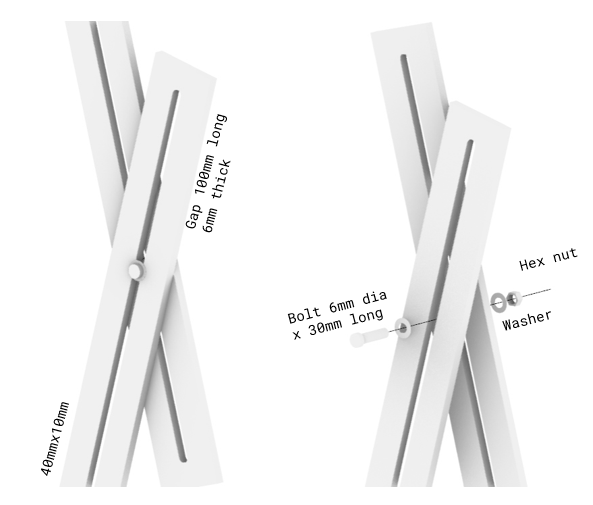
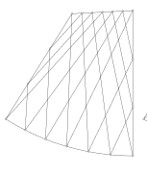
Mesh connection Geometry of the mesh in 2d Geometry of the mesh once on structure
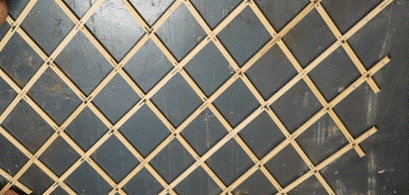
Joinery prototype
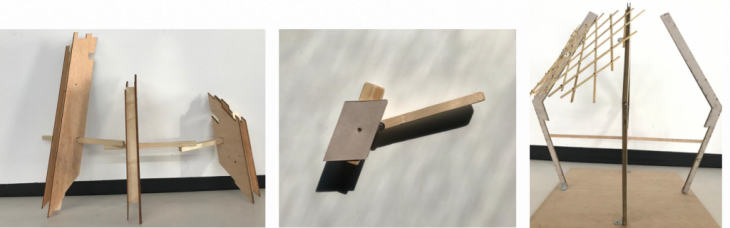
Intermediate ring to replace oculus Ribs and intermediate floor joints Design Prototype
Structural Analysis Comparison

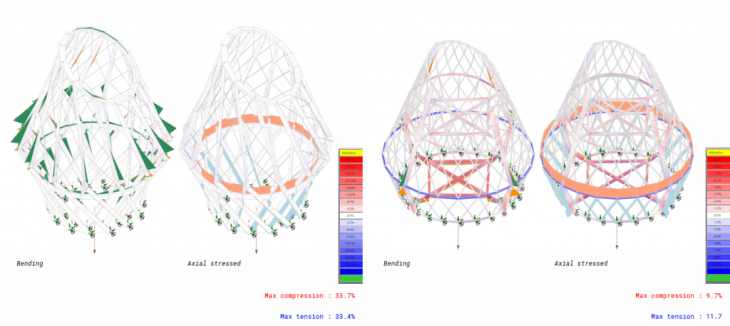
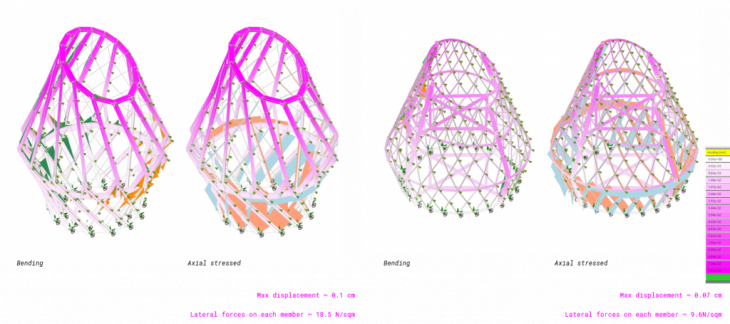
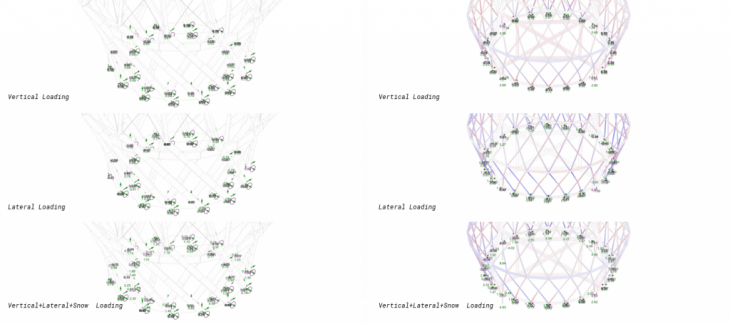
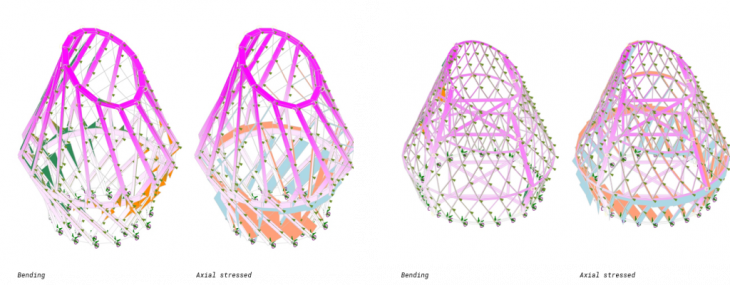
Ideas for Skins
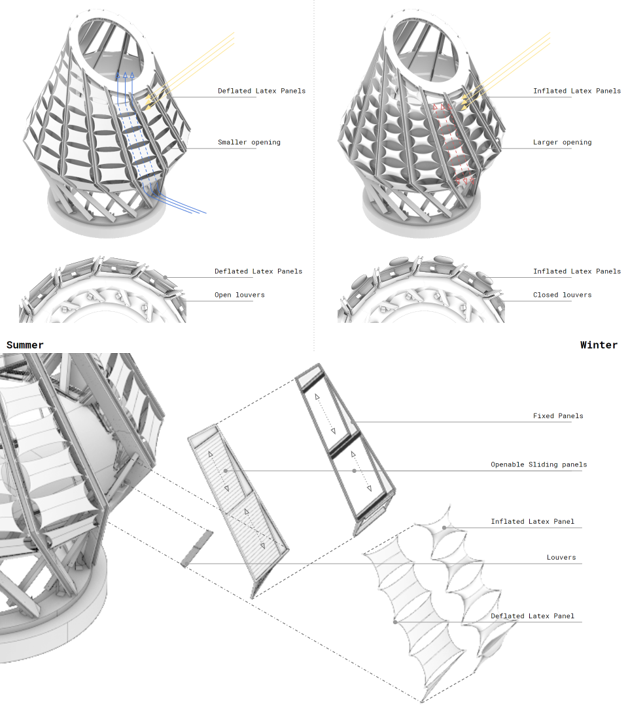
Iteration 1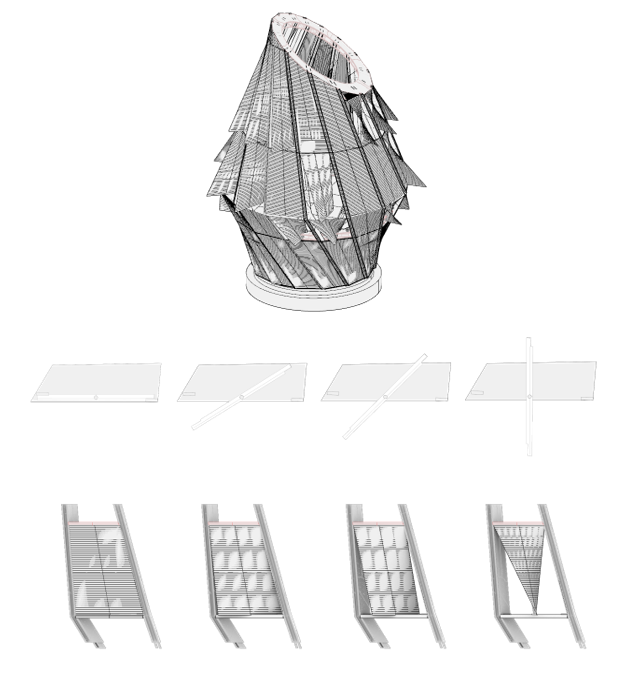
Iteration 2
Data Informed Structures / Nest 2.0 – Design for assembly and disassembly
Project by I.A.A.C. 2019/2020 by:
Students: Yash Palshetkar, Dinesh kumar Vellingiri, Nihar Mehta, Sai Preetham Alapati
Faculty: Manja van de Worp, Raimund Krenmueller